
The essence
The work can continue, but the load has to change.
Upright, the Ten of Wands allows for completion while making the cost impossible to ignore. Too many duties may have gathered around one person, especially near the final stage. Responsibility can keep work moving, but it narrows perspective and increases error. Effective completion includes delegation, reduction, and an honest account of capacity.
Ten of Wands Tarot Card Meaning — Upright
This card is easily reduced to 'keep going.' Its yes carries a serious condition: completion by the present method may cause exhaustion and further problems. List the load. Separate what must be handled personally, what can be transferred, and what no longer needs to be done.
responsibility · burden · completion pressure · duty · overwork
Ten of Wands Tarot Card Meaning — Reversed
Reversed, the arrangement may fail under its own weight, producing delay, abandonment, or a missed obligation. The card can also describe healthier release when duties are reassigned and the essential goal becomes manageable. The difference is practical: has the scope, ownership, or workload actually changed?
Putting down a burden is not inherently irresponsible. An impossible plan should be renegotiated before it damages the work. Difficulty near the end is not always a reason to abandon every commitment, either. Reversal calls for an honest response to overload, not a performance of heroism or escape.
overload · collapse · release · unequal duties · missed deadline
Ten of Wands Love Meaning
Ten of Wands Upright Love Meaning
Work, family, or practical duties may weigh heavily on the relationship, with one person carrying most planning and care. Affection can remain while unequal labor erodes closeness. Naming and redistributing the load matters.
Ten of Wands Reversed Love Meaning
The existing arrangement may be impossible to maintain, or both partners may finally be reducing outside pressure. Improvement depends on real redistribution; reassurance changes little if the same duties remain.
Ten of Wands Career Meaning
Ten of Wands Upright Career Meaning
A deadline may still be achievable, but ownership is concentrated and quality is under pressure. Confirm priorities, hand off work, and remove optional requirements. Chronic overload is not proof of commitment.
Ten of Wands Reversed Career Meaning
The plan may slip because workload exceeds capacity, or deliberate reduction may make the core project workable again. Improvement depends on concrete changes to scope, resources, and ownership.
The short answer
Is Ten of Wands a Yes or No Tarot Card?
In TarotAI’s reviewed yes or no reading system, orientation and the wording of your question both matter.
Upright: burdened yes
Completion is not the only measure; the cost deserves counting too.
Reversed: overloaded no
Letting go of what was never yours alone is how you reach the destination.
Look a little closer
Inside the artwork
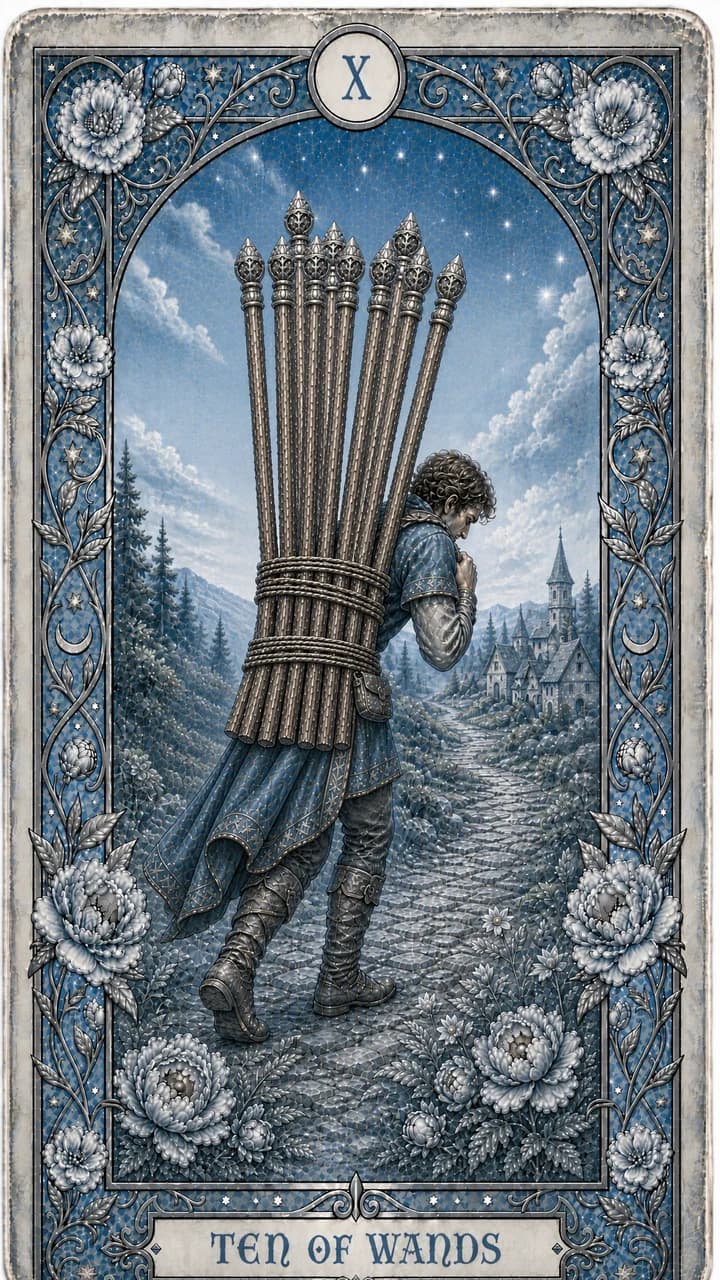
- The ten wands on the back
- The entire bundle rests on one person, making accumulated duty and poor distribution visible.
- The binding ropes
- Tight bindings turn separate tasks into one rigid load that is hard to sort or share.
- The forward-leaning figure
- The posture conveys sustained effort and strain, with the burden limiting awareness.
- The road to the village
- A destination gives the labor purpose while showing that practical completion is still required.
Common questions
Does the upright Ten of Wands mean yes or no?
It generally leans yes because completion remains possible, but the yes carries a high cost. It should never be used to endorse an unsafe or unsustainable arrangement.
Does it simply mean I should push a little longer?
No. Nearness to a goal does not make the load reasonable. When work harms health or judgment, reduce, delegate, or renegotiate rather than romanticizing a final push.
Does the reversed Ten mean release or collapse?
Either can apply. Reassigned duties and a smaller scope point to healthy release. No change in conditions followed by inability to continue points toward overload.
How is it different from the Ten of Swords?
The Ten of Wands is still moving under excessive responsibility and asks how work can be completed. The Ten of Swords describes an ending or a condition that cannot continue unchanged.
Does it mean a relationship must end?
No. It more often highlights an unsustainable share of practical or emotional labor. The future depends on whether the burden is acknowledged and redistributed.