
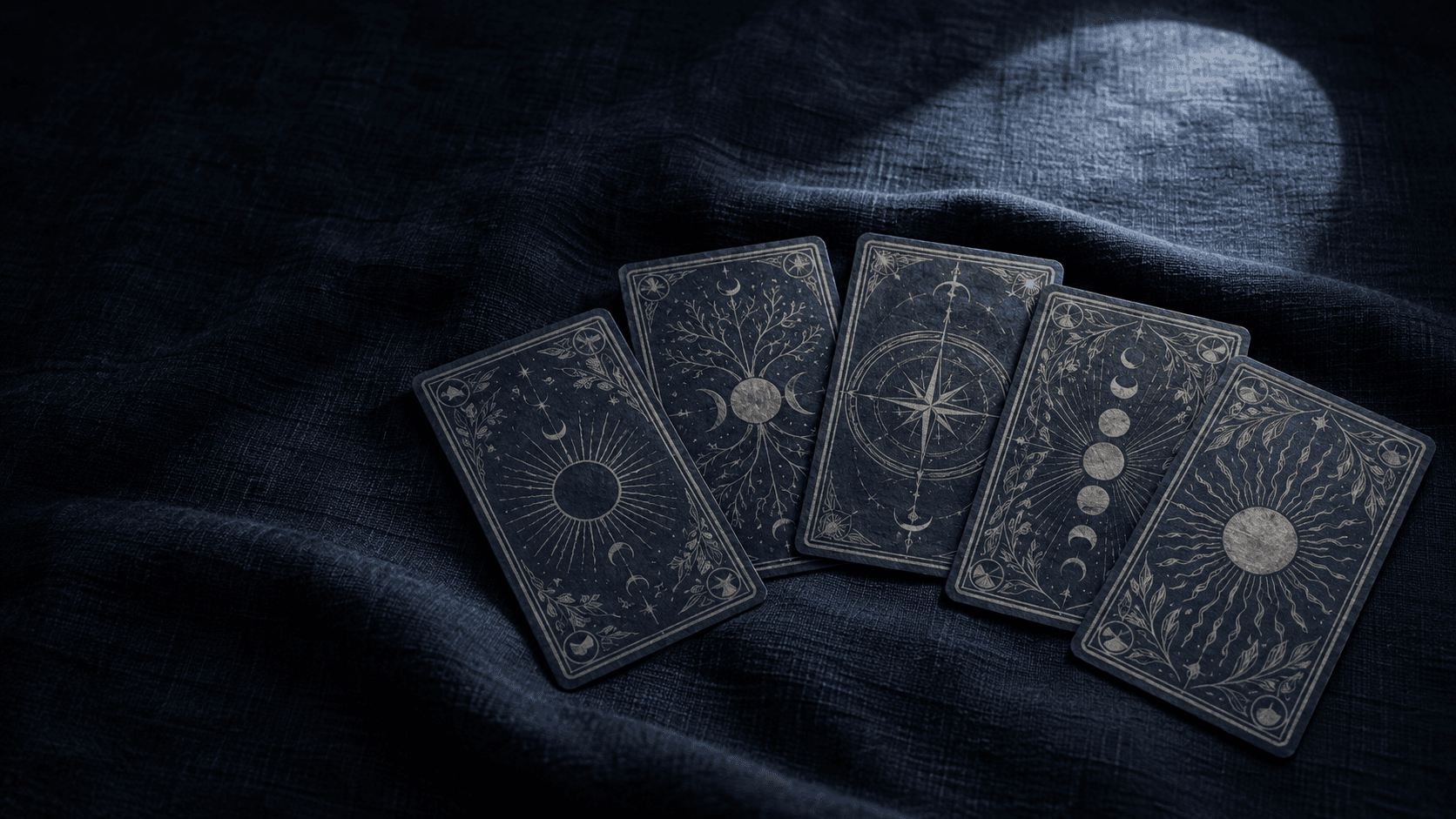
5 cards
Choice
A two-path spread for decisions with more than one honest option.
Best for
Weighing two realistic paths, such as whether to stay, go, accept, or decline.Tarot spreads
For a focused question, a daily reflection, or one next step.
For a situation with context, a challenge, and a direction to explore.
For choices, relationships, and questions with several moving parts.
One card is often enough when the question is clear.
1 readingThese three-card readings are being prepared for moments that need more than one perspective.
3 readingsA three-card view of the situation, its central challenge, and a possible next direction.
Best for
Understanding a situation, its main challenge, and one useful next direction.A three-card reflection on the connection in front of you.
Best for
Reflecting on communication, boundaries, or the shape of a relationship.A three-card reflection for work, direction, and momentum.
Best for
A work decision, a project, or the direction you want to build toward.These longer spreads are being prepared for questions with more moving parts.
4 readingsA two-path spread for decisions with more than one honest option.
Best for
Weighing two realistic paths, such as whether to stay, go, accept, or decline.A five-card view of each perspective and the space you share.
Best for
Looking at your position, another perspective, and the dynamic between you.A seven-card reading for the forces around a fuller question.
Best for
A layered question that needs context, influences, advice, and a likely direction.A ten-card spread for a situation with several moving parts.
Best for
A complex situation with several people, pressures, or choices already in motion.