
Some relationship questions don't fit in three cards. You love each other, but you've been circling the same conversation for months. Or there's a move, a new job, a family situation, and an old hurt all tangled together. That's when the Celtic Cross is worth the extra cards.
It's a ten-card spread built for complicated situations, and a Celtic Cross love reading works well because relationships are rarely about one thing. The catch is that ten cards can easily turn into ten separate horoscopes. Below, you'll find what each position asks in a love reading and how to keep the cards talking to each other.
When the Celtic Cross is worth using for love
Use the Celtic Cross when your question has several moving parts and you want to see how they push on each other. Think of a long-term relationship at a crossroads, or a decision that affects you both.
It's too much for a quick check-in or a simple yes/no question. For those, a smaller spread is easier to read honestly. Our relationship tarot spreads guide compares seven layouts, and the five-card Relationship Reading covers both people, the foundation, and a direction in half the cards.
Ask a question with room in it
A Celtic Cross needs a question that can hold ten answers. "Will we stay together?" can't. These can:
What is influencing my relationship right now?
What do I need to understand about the distance between us?
What would help us make this decision together?
What pattern keeps repeating between us, and where does it come from?
If you catch yourself wanting a single yes or no, use a yes or no reading instead and save the Celtic Cross for when you want the full picture. For more ideas, see our list of questions to ask tarot about love.
How to lay out the Celtic Cross
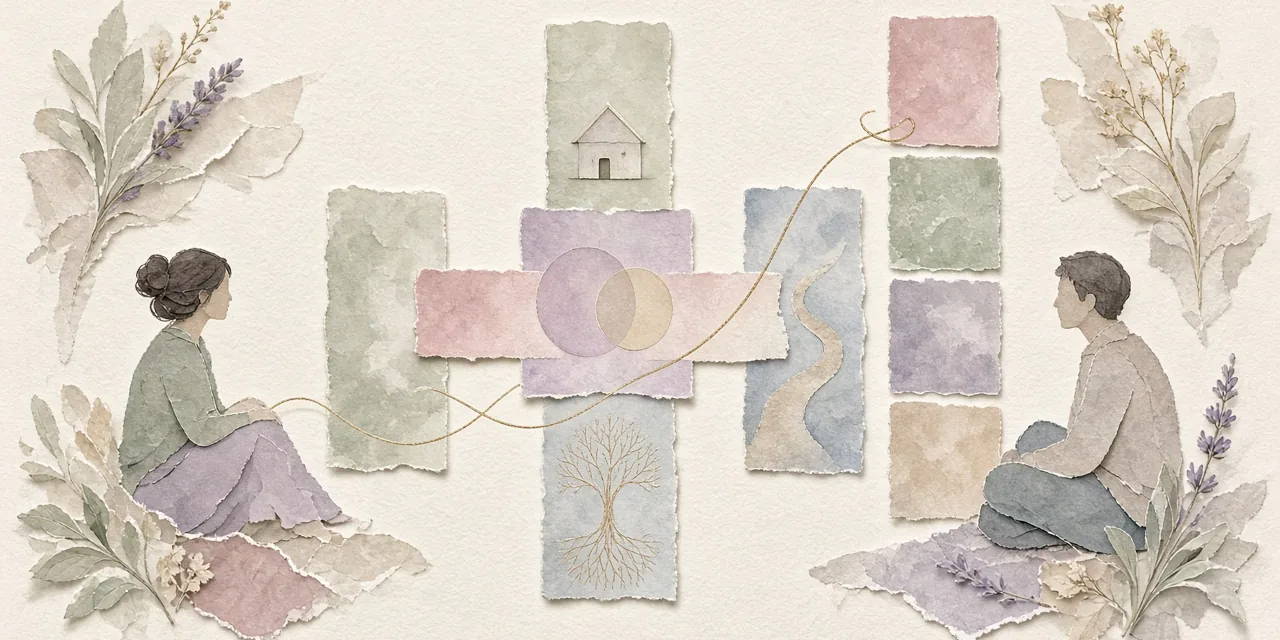
The first six cards make a cross. Place card 1 in the center and lay card 2 across it. Put card 3 below them, card 4 to the left, card 5 above, and card 6 to the right. Then build a column of four cards to the right of the cross, from bottom to top: cards 7, 8, 9, and 10.
Position names and numbering vary between traditions, especially for cards 3 to 6, so don't worry if another guide orders them differently. Pick one system and stick with it. The names below follow the version TarotAI uses in its Celtic Cross spread.
The 10 positions of a Celtic Cross love reading
| # | Position | What it asks in a love reading | Check it against real life |
|---|---|---|---|
| 1 | Present Situation | What is the heart of this relationship question right now? | What is actually happening between you this month |
| 2 | Challenge | What is crossing the situation, helping, blocking, or asking for a response? | The tension you both keep running into |
| 3 | Foundation | What need, condition, or pattern sits underneath? | What each of you needs that rarely gets said |
| 4 | Past Influence | What has already happened that still shapes things? | Events, past relationships, or old fights that still come up |
| 5 | Your Goal | What are you hoping for or working toward? | What you'd say if asked what you want from this |
| 6 | Near Future | What may develop next if things continue as they are? | What's already scheduled or likely in the coming weeks |
| 7 | Your Position | Your stance, choices, and what you can take responsibility for | How you've been showing up, honestly |
| 8 | Environment | Outside conditions and the other person's observable behavior | What they do and say, plus work, family, distance, money |
| 9 | Hopes & Fears | What hopes and worries may be shaping how you read this? | Where hope or fear is filling in gaps |
| 10 | Outcome | The likely direction if the current pattern continues, and what could change it | What would have to change for a different result |
Cards 1 and 2: the heart of it
Read these two together before anything else. Card 1 is the situation and card 2 is the force lying across it. Ask what's going on, and how card 2 complicates it or calls for a response. A Challenge card can be a perfectly pleasant card that simply asks something of you.
Cards 3 to 6: roots, history, hopes, and what's next
Foundation (3) and Past Influence (4) explain how you got here. Your Goal (5) is what you're reaching for, which isn't a promise that you'll get it. Near Future (6) is what may come next if nothing shifts. Read 4 and 6 as a before and after around the present.
Cards 7 and 8: you, and what's around you
Your Position (7) is about you: your attitude, your choices, the part you can change. Environment (8) covers what surrounds the relationship, including your partner's observable behavior. Keep card 8 to what you can actually see. It isn't a window into their private thoughts or proof of a secret.
Cards 9 and 10: hopes, fears, and a direction
Hopes & Fears (9) can explain why the whole reading feels the way it does. It's sometimes both at once, like hoping to move in together and dreading what happens if you do. The Outcome card (10) describes where things may head if the current pattern continues. Always ask what could change it.
Read it as one story, not ten definitions
Once you've looked at each card, step back.
Count the suits. A lot of Cups points to feelings and connection. Wands lean toward drive and conflict, Swords toward thoughts and communication, Pentacles toward money, work, and practical life.
Count the Major Arcana. Several Majors can suggest the question touches something big for you.
Look for repeats. Repeated numbers or similar images can show the reading's main theme.
Connect the staff. Read 7 to 10 as a chain: your stance, the environment, your hopes and fears, then the direction.
Then write one sentence for each of these: what's really at the heart of this, what's influencing it most, and what the spread suggests you understand or try next. Three plain sentences are much easier to come back to next month than ten separate card meanings.
An example Celtic Cross love reading
This example is invented to show how the positions work together.
You've been with your partner for two years. Six months ago they started a demanding new job. You've talked about moving in together, but the conversation keeps getting pushed back. Your question: "What is influencing my relationship right now, and what would help us?"
1, Present Situation: Two of Cups reversed. Closeness that comes and goes, and effort that isn't balanced right now.
2, Challenge: Ten of Cups reversed. The affection is there, but ideas about home and commitment may be pulling apart.
3, Foundation: Temperance. Underneath, there's a real willingness to adjust to each other at a pace that works.
4, Past Influence: Wheel of Fortune. The job change shifted the relationship's rhythm.
5, Your Goal: The Lovers. You want to choose each other again, through a shared decision.
6, Near Future: Eight of Wands. The postponed conversation may finally happen soon.
7, Your Position: Queen of Cups reversed. You've been doing most of the emotional work and soothing.
8, Environment: The Hermit. Your partner has been pulling back into work and quiet evenings, and hasn't said much about why.
9, Hopes & Fears: The Moon. You're reading the silence as a sign, maybe through an old fear.
10, Outcome: Justice. A direction toward a clear, fair agreement, but only if the conversation actually happens and you both say what you want.
Now the story. The heart of it (cards 1 and 2) is uneven effort around a question about the future. The roots are good (Temperance), but the job (Wheel of Fortune) changed the rhythm, and The Hermit shows what that looks like day to day: more distance, less explanation. Your Queen of Cups reversed says you've compensated by carrying more, and The Moon says the gaps are being filled with worry.
The Eight of Wands and Justice together point to one thing: have the conversation, and make it about agreements, not reassurance. What does each of you want from living together, and what's realistic with the new job? The Outcome depends on that talk happening. If it keeps getting postponed, the reading describes more of the same.
Mistakes that throw the reading off
Jumping to card 10. The Outcome only makes sense after the other nine.
Treating Environment as mind reading. Card 8 is about behavior and circumstances, not secret feelings.
Reading Your Goal as a promise. Card 5 shows what you want, not what's guaranteed.
Redrawing when you don't like it. If the reading is hard to hear, write it down and come back to it in a few days.
If ten cards is too much
If you're new to tarot or the question is simpler, start smaller. The eight-card Venus Relationship spread goes deep on a relationship with less to juggle. For a crush or a new connection, try the What Does He Think of Me? spread or the Does He Love Me? spread.
Frequently asked questions
How do I perform a Celtic Cross tarot reading?
Pick a question that gives the cards something specific to explore, then shuffle and lay out ten cards: six in a cross and four in a column to the right. Read the two center cards first, then the rest of the cross, then the column from bottom to top. Finish by summing up the heart of the situation, its biggest influence, and what to understand or try next.
Can you use the Celtic Cross for a love reading?
Yes. It suits relationship questions with several moving parts, like a decision you face together or a pattern that keeps repeating. For a quick question about a new connection, a three- or five-card spread is usually easier to read.
Which cards should I read first in a Celtic Cross?
Start with cards 1 and 2 together. Card 1 is the present situation and card 2 is what crosses it. Once you understand that central tension, the other eight cards are much easier to place.
What does the outcome card mean in a Celtic Cross love reading?
It shows the likely direction if the current pattern continues. It isn't a fixed fate. Look at your own position and the near future to see what could change it.
Why are Celtic Cross positions different on different websites?
There are several traditions for numbering and naming the positions, especially cards 3 to 6. Choose one version and use it consistently so your readings can be compared over time.