The essence
Desire, dependence and the cost of staying attached.
The Devil represents a strong attachment that may exact a price in freedom. Pleasure, security, status and familiarity can all be part of its appeal, while fear or external control can make refusal difficult. The subject is the relationship between attraction and power, not the claim that desire itself is wrong.
The Devil Tarot Card Meaning — Upright
The card's appeal is important to its meaning. A habit, relationship or position may genuinely provide something wanted, making its costs easier to overlook. As dependence grows, the ability to refuse can shrink. Understanding the situation requires attention to both reward and restriction, without reducing a difficult entanglement to a simple lack of willpower.
Desire · Dependence · Control · Constraint
The Devil Tarot Card Meaning — Reversed
Reversed, the Devil can indicate recognition of an unhealthy dependence and the beginning of a change. It can also highlight repeated attempts to withdraw followed by a return to the same conditions. A change in awareness matters, but greater freedom has to be assessed through actual choices, support and circumstances.
Acknowledging a problem does not instantly create the means to leave it. Practical ties, access to resources and established patterns of interaction may all need attention. Change becomes more credible as viable choices increase. Where coercion or threats are present, support and safety matter more than proving determination.
Breaking a pattern · Recurring dependence · Recognizing the cost
The Devil Love Meaning
The Devil Upright Love Meaning
Strong physical attraction may coexist with jealousy, possessiveness or a dependence that makes refusal difficult. Attraction alone does not establish harm: consider whether participation is voluntary and boundaries are respected. Intensity is not a reason to excuse control, just as desire is not evidence that something must be wrong.
The Devil Reversed Love Meaning
Someone may be loosening an excessive dependence or trying to leave a cycle of conflict and return. Repetition is also possible. Meaningful change is visible in respected limits, increased support and choices made without the old pressure, rather than in an apology or a short interval apart alone.
The Devil Career Meaning
The Devil Upright Career Meaning
Income, status or a sense of achievement may come with increasingly costly demands on time and autonomy. Fear of losing those benefits can make unreasonable conditions difficult to challenge. Recognizing the trade-off is useful without pretending that a livelihood can always be abandoned immediately.
The Devil Reversed Career Meaning
There may be an effort to renegotiate demands, reduce overwork or develop alternatives to an unsuitable position. It is also possible to change workplaces while repeating the same self-exhausting habits. The relevant difference is whether workload and freedom have actually changed, not merely the name of the role.
The short answer
Is The Devil a Yes or No Tarot Card?
In TarotAI’s reviewed yes or no reading system, orientation and the wording of your question both matter.
Upright: binding no
The outcome is constrained by unhealthy dependency, short-term temptation, or unequal power. Recognizing remaining choice is the first step toward release. The card does not prove that anyone is inherently evil.
Reversed: liberating yes
The situation can move in the direction asked because the constraint is beginning to loosen. Freedom must be stabilized through concrete boundaries, alternative support, and repeated action.
Look a little closer
Inside the artwork
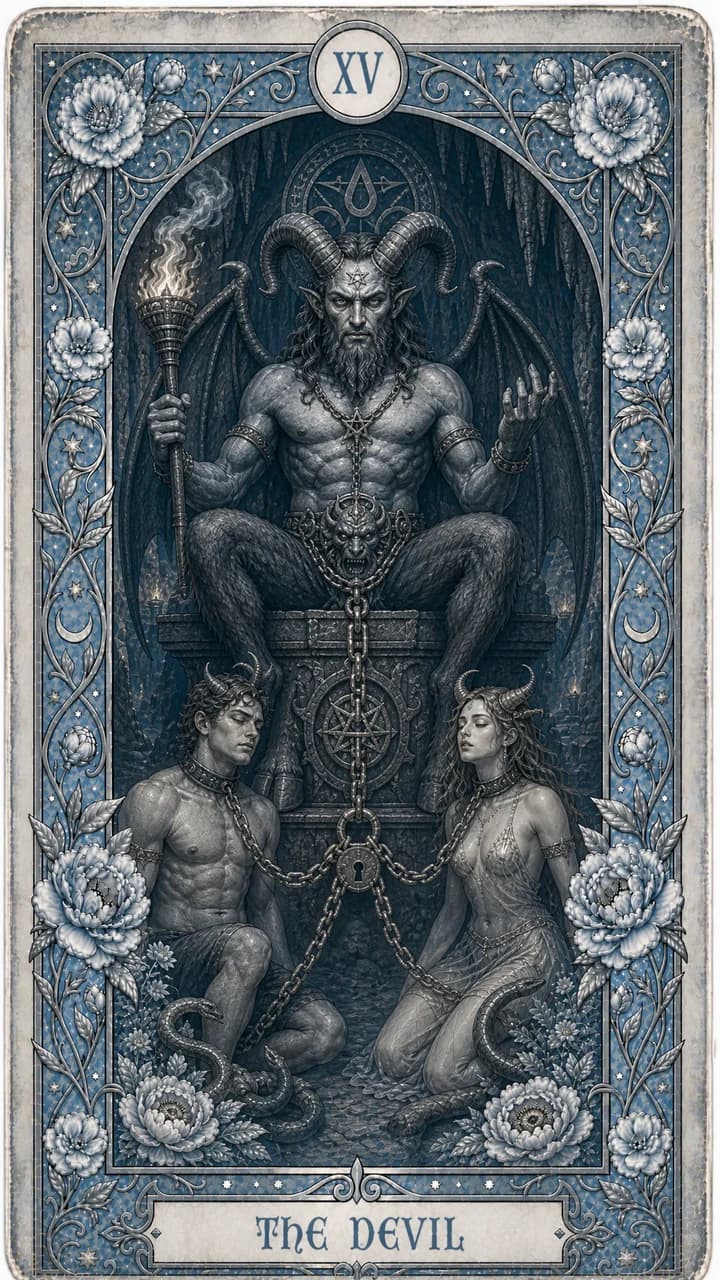
- The heavy chains and central lock
- Several chains meet at one lock, suggesting connected dependencies and constraints. Release may require practical conditions and help, not just a decision to stop feeling attached.
- The collars
- The collars make restriction visible, drawing attention to a reduced ability to refuse, choose or leave.
- The elevated Devil
- The unequal positions suggest power exercised through desire, fear or a controlling influence.
- The burning torch
- The flame suggests appetite and temptation, giving the scene of constraint an accompanying sense of attraction.
Common questions
Does the Devil mean another person is bad?
No. It can describe desire, control or dependence, but cannot establish someone's character or justify labeling them evil. Concerns about coercion or mistreatment need to be grounded in actual behavior.
Does the upright Devil always mean an unhealthy relationship?
No. It can express strong attraction and desire. The distinction is whether both people retain consent and freedom of choice. Intensity is neither a diagnosis of harm nor an excuse for controlling behavior.
Does the reversed Devil mean I am already free?
Not necessarily. It may mark recognition and an attempt to change, or highlight how difficult that change remains. Look for a real reduction in restrictions rather than treating reversal itself as proof of release.
Can the Devil identify an addiction or mental health condition?
No. Dependence is a symbolic theme, not a medical diagnosis. Professional support may be useful when a behavior causes real difficulties, but a card cannot establish a condition.
Why are the Devil and the Lovers often compared?
Both concern attraction and attachment. The Lovers emphasizes voluntary choice and shared values; the Devil examines an attachment that may have become difficult to refuse. The contrast concerns freedom within the bond, not whether desire is good or bad.